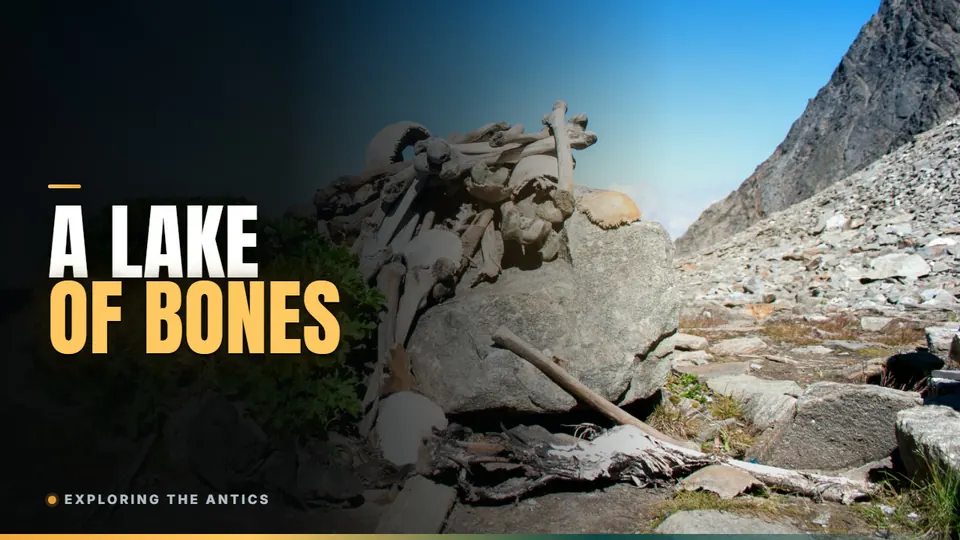
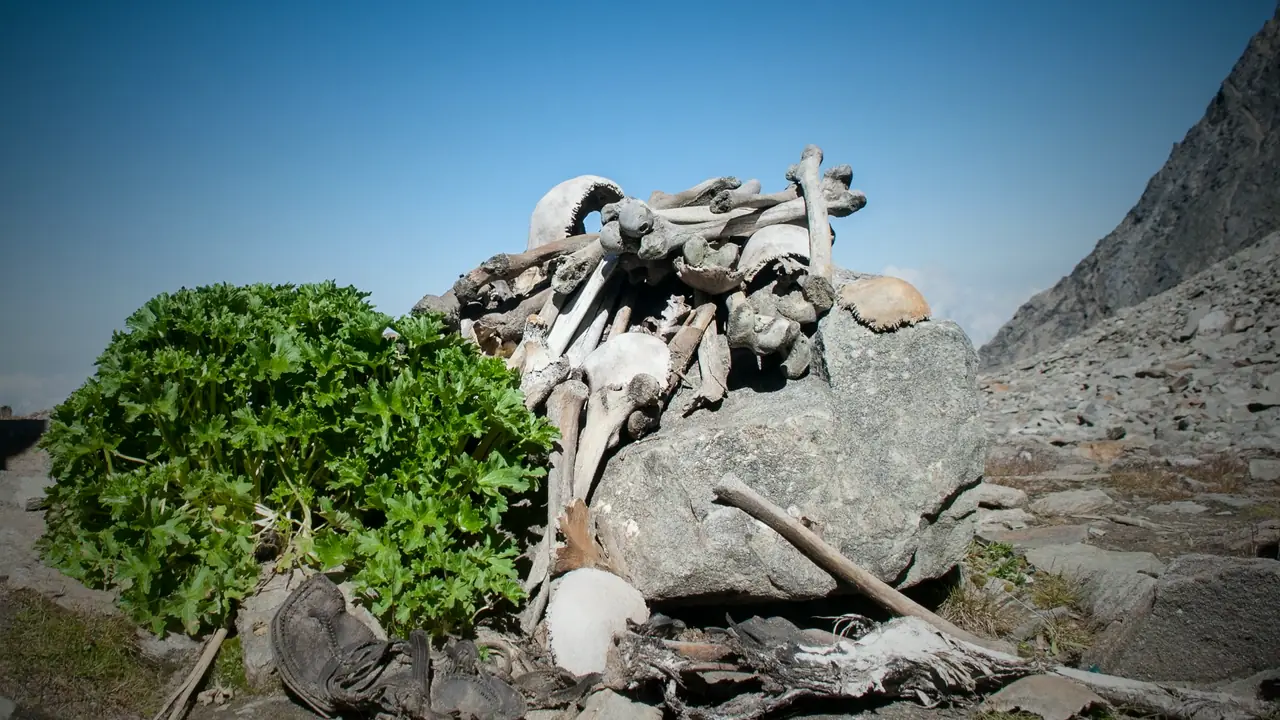
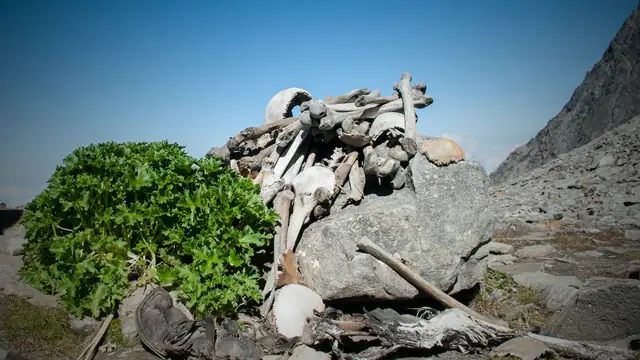
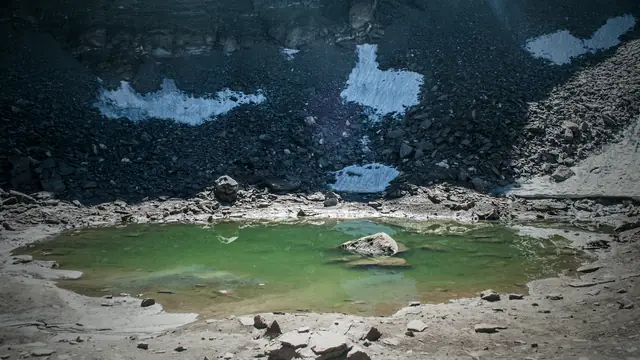
In nineteen forty two, a ranger found a lake full of bones. Legend says an angry goddess sent hailstones as hard as iron. The DNA in those bones tells a stranger story. This is Roopkund, more than five thousand metres up in the Himalayas, the lake of skeletons.
उन्नीस सौ बयालीस में, एक रेंजर को हड्डियों से भरी एक झील मिली। कथा कहती है, एक क्रोधित देवी ने लोहे जैसे सख़्त ओले बरसाए। पर उन हड्डियों का डीएनए एक और भी अजीब कहानी कहता है। ये है रूपकुंड, हिमालय में पाँच हज़ार मीटर से भी ऊपर, कंकालों की झील।
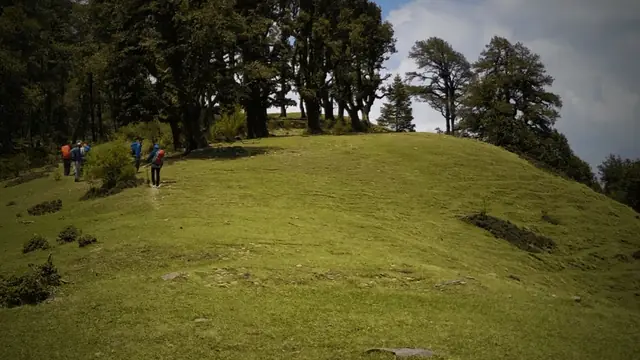
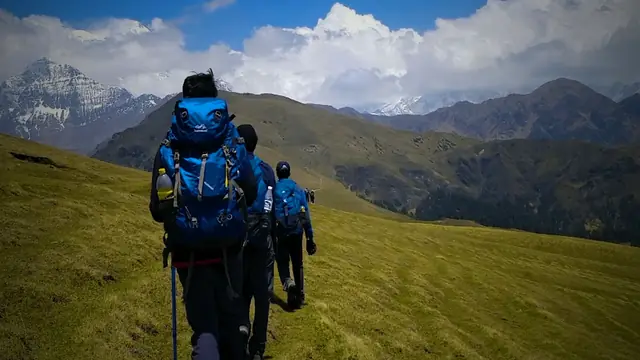
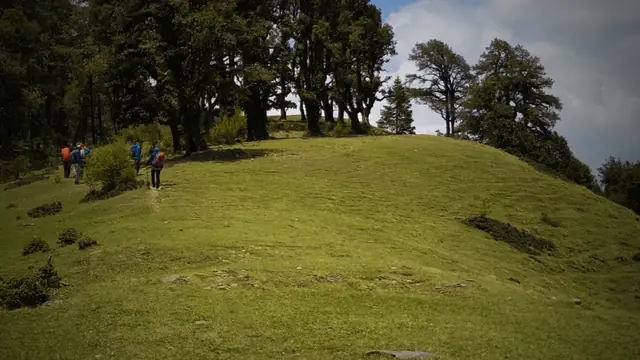
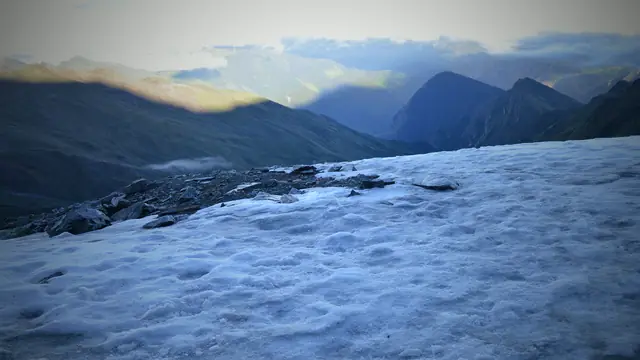
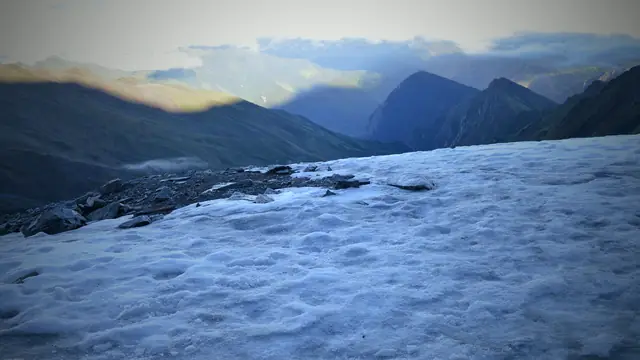
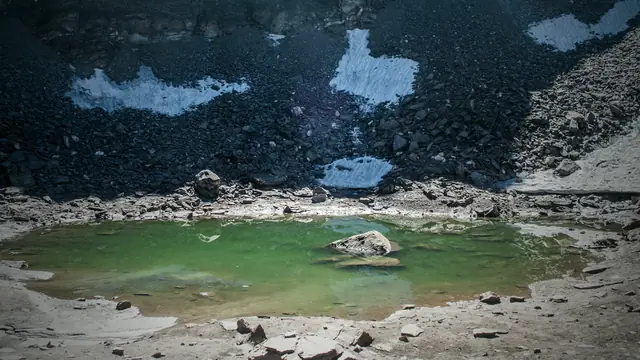
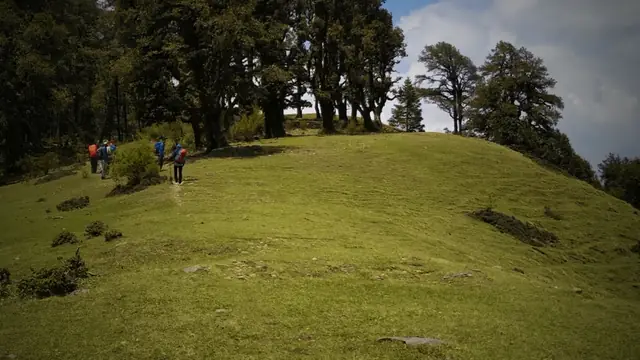
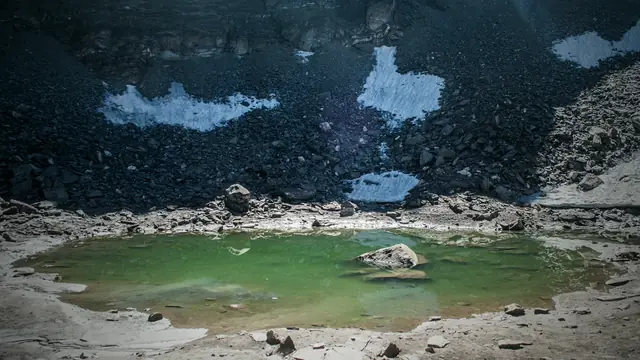
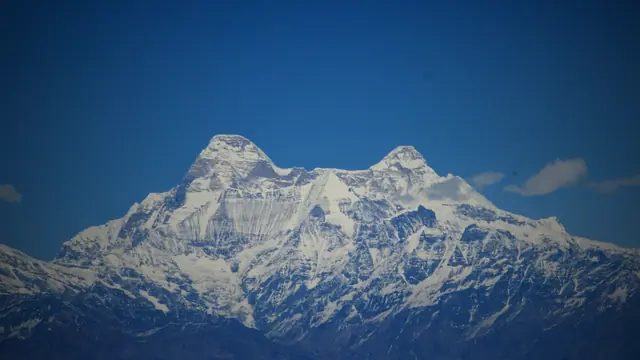
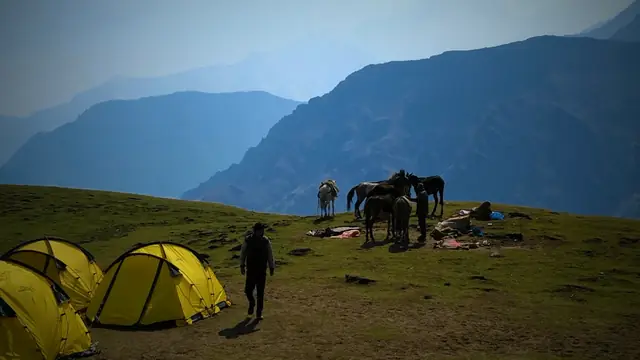
Roopkund lies in the Chamoli district of Uttarakhand, in a rocky hollow beneath the great peaks of Trishul and Nanda Ghunti. There are no villages here. No trees. Only rock, snow, and thin, freezing air. It takes several days of hard trekking just to reach it.
रूपकुंड उत्तराखंड के चमोली ज़िले में है, त्रिशूल और नंदा घुंटी की विशाल चोटियों के नीचे, एक पथरीले गड्ढे में। यहाँ कोई गाँव नहीं। कोई पेड़ नहीं। बस चट्टान, बर्फ़, और पतली, जमा देने वाली हवा। यहाँ तक पहुँचने में ही कई दिन की कठिन ट्रेकिंग लगती है।
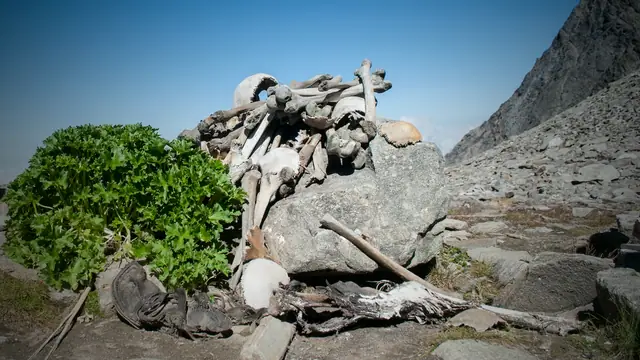
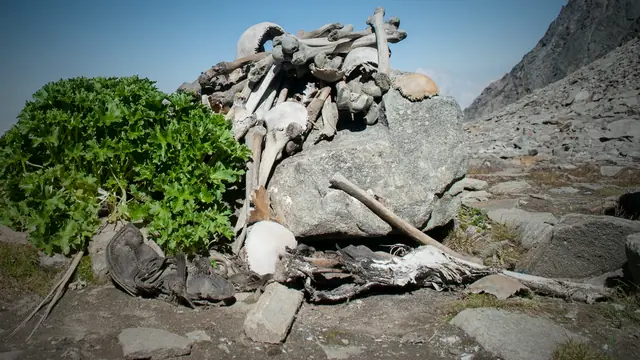
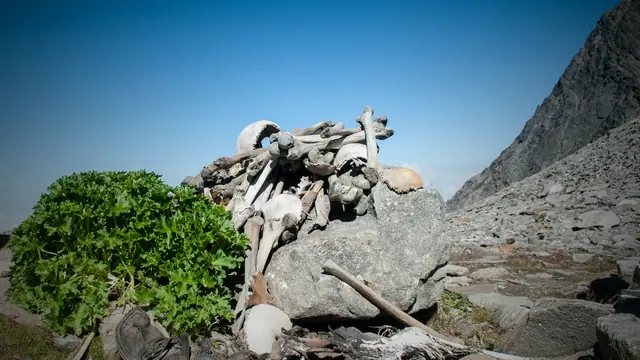
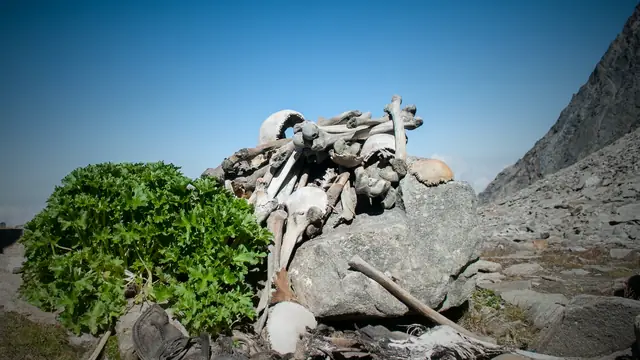
And yet, scattered around its shore and beneath its icy water, lie the remains of a great many people. Estimates range from about two hundred to several hundred. Who were they? How did they get here? And what killed them, at the top of the world?
और फिर भी, इसके किनारे पर, और बर्फ़ीले पानी के नीचे, बहुत सारे लोगों के अवशेष बिखरे पड़े हैं। अनुमान क़रीब दो सौ से कई सौ तक के हैं। ये लोग कौन थे? यहाँ कैसे पहुँचे? और दुनिया की इस ऊँचाई पर इन्हें किसने मारा?
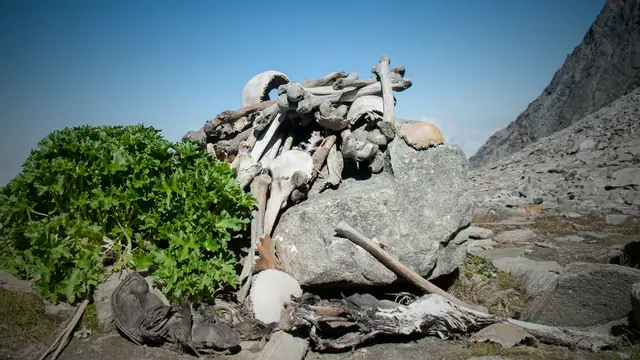
The ranger was Hari Kishan Madhwal, and his discovery began the modern story of the lake. He found it filled with bones.
वो रेंजर थे हरि किशन मधवाल, और उनकी खोज से झील की आधुनिक कहानी शुरू हुई। उन्होंने झील को हड्डियों से भरा पाया।
It was the middle of the Second World War. And at first, some feared the worst. Could these be enemy soldiers, who had crossed the mountains in secret, and frozen to death? But the bones were far too old for that.
वो दूसरे विश्व युद्ध का दौर था। और शुरू में, कुछ लोगों को सबसे बुरा डर लगा। कहीं ये दुश्मन के सैनिक तो नहीं, जो चुपके से पहाड़ पार करते हुए ठंड से मर गए? पर हड्डियाँ उसके लिए बहुत ज़्यादा पुरानी थीं।
High in the mountains, the cold and the dry air work like a freezer. With so little warmth, the bacteria that break down a body can barely survive. So instead of vanishing, these remains had lasted for centuries.
पहाड़ों की ऊँचाई पर, ठंड और सूखी हवा फ़्रीज़र जैसा काम करती हैं। इतनी कम गर्मी में, शरीर गलाने वाले बैक्टीरिया मुश्किल से ज़िंदा रहते हैं। इसलिए ये अवशेष ग़ायब होने की बजाय, सदियों तक टिके रहे।
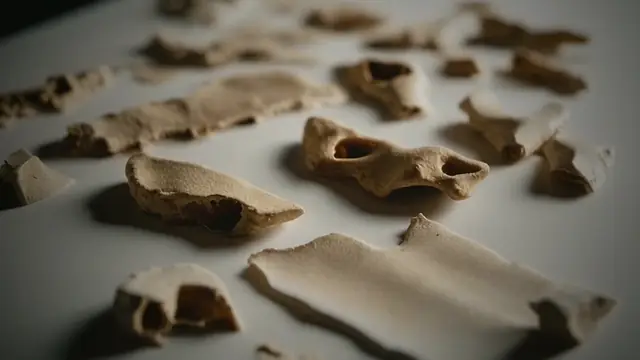
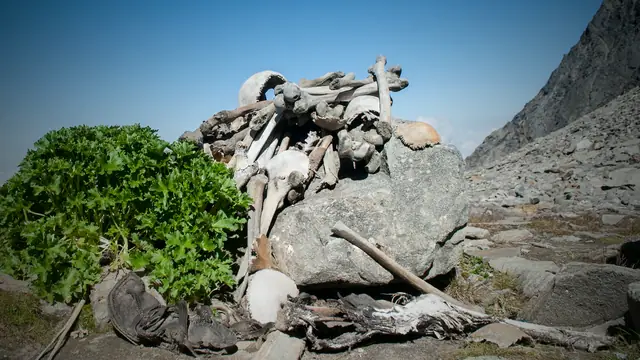
The cold had kept a strange secret. Some of the bodies still had hair. Some still had flesh. And among the bones lay rings, spears, bamboo staves, and leather shoes. These were not soldiers. They looked like travellers. Perhaps pilgrims.
ठंड ने एक अजीब राज़ सँभालकर रखा था। कुछ शवों पर अब भी बाल थे। कुछ पर अब भी मांस। और हड्डियों के बीच पड़ी थीं अँगूठियाँ, भाले, बाँस की लाठियाँ, और चमड़े के जूते। ये सैनिक नहीं थे। ये यात्री लगते थे। शायद तीर्थयात्री।
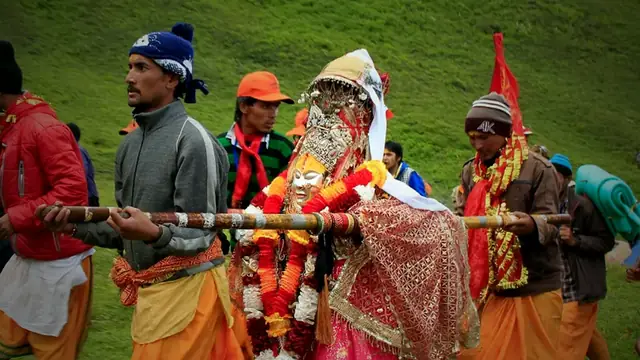
The people of these mountains already had an answer. And it is a story told in their folk songs to this day.
इन पहाड़ों के लोगों के पास पहले से एक जवाब था। और ये कहानी आज भी उनके लोकगीतों में गाई जाती है।
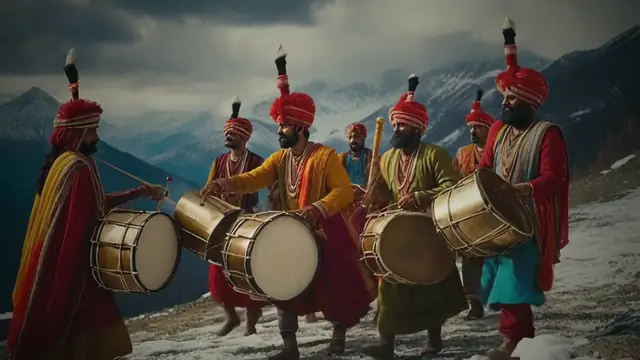
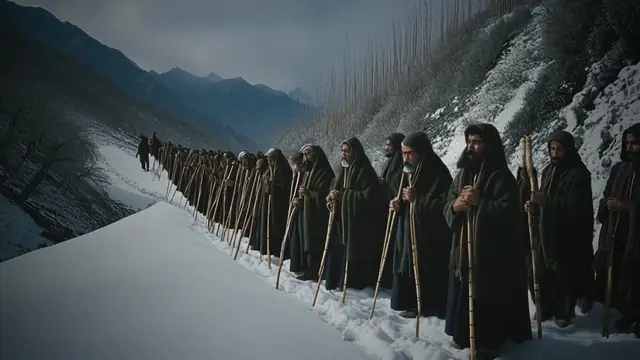
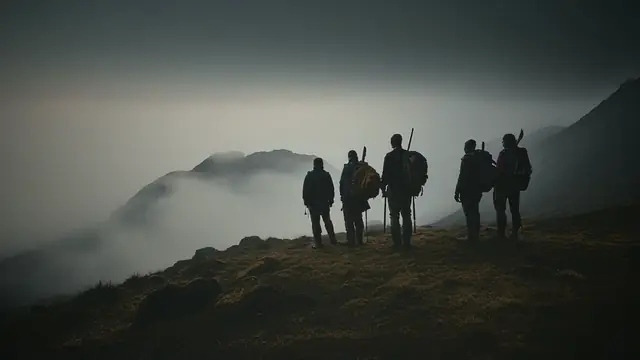
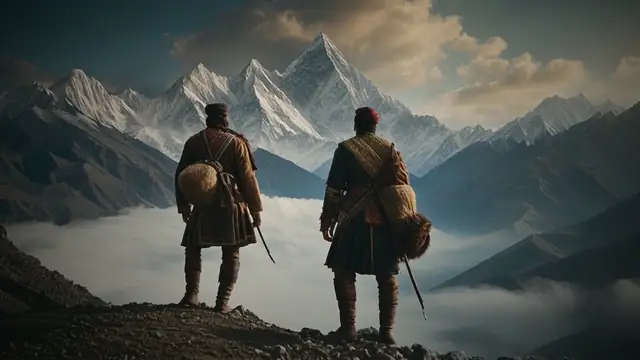
Long ago, the legend says, a king named Jasdhaval of Kannauj set out on a pilgrimage to the goddess Nanda Devi. With him went his queen, Balampa, who was expecting a child, along with servants, musicians, and dancers.
कथा कहती है, बहुत पहले, कन्नौज के राजा जसधवल नंदा देवी की तीर्थयात्रा पर निकले। उनके साथ थीं उनकी रानी बलम्पा, जो गर्भवती थीं, और साथ में सेवक, संगीतकार और नर्तकियाँ।
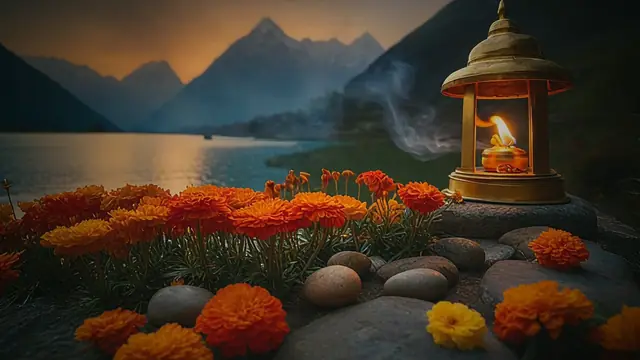
But the pilgrimage was a sacred journey, with strict rules. The legend says the king's party broke them. The dancers performed on holy ground. In some versions, the queen gave birth close to the sacred lake, which was forbidden on that holy ground.
पर ये तीर्थयात्रा एक पवित्र यात्रा थी, सख़्त नियमों वाली। कथा कहती है, राजा के दल ने वो नियम तोड़े। नर्तकियों ने पवित्र भूमि पर नृत्य किया। कुछ कथाओं में, रानी ने पवित्र झील के पास ही बच्चे को जन्म दिया, जो उस पवित्र भूमि पर वर्जित था।
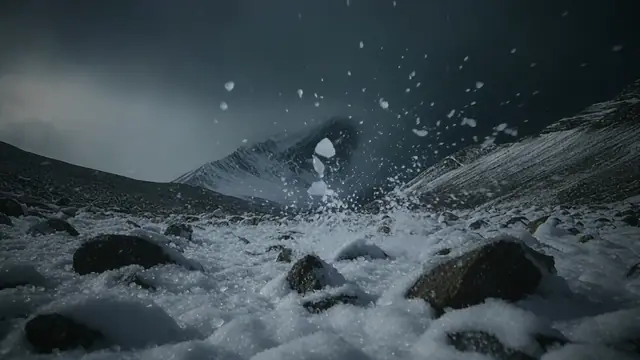
And so, the goddess grew angry. As the pilgrims climbed towards the lake, the sky turned dark. And a storm began, of hailstones as hard as iron. No one, the legend says, survived.
और तब देवी क्रोधित हो गईं। जैसे-जैसे तीर्थयात्री झील की ओर चढ़े, आसमान काला हो गया। और ओलों का तूफ़ान आया, लोहे जैसे सख़्त ओले। कथा कहती है, कोई नहीं बचा।
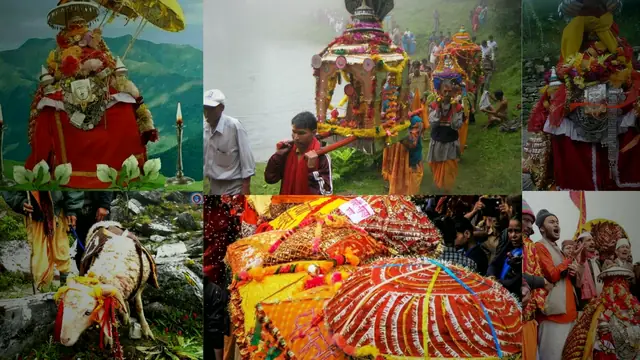
It is a powerful story. Different villages tell it in different ways. But for centuries, it was the only explanation anyone had. Until scientists came to the lake.
ये एक दमदार कहानी है। अलग-अलग गाँव इसे अलग-अलग ढंग से सुनाते हैं। पर सदियों तक, बस यही एक जवाब था। तब तक, जब तक वैज्ञानिक झील तक नहीं पहुँचे।
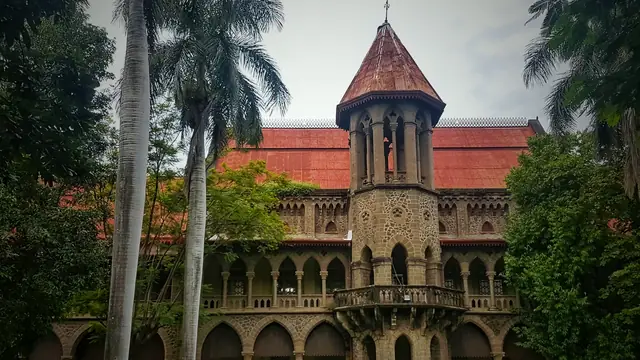
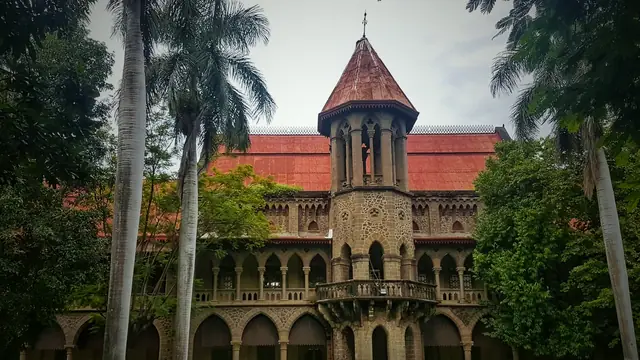
In two thousand four, a team working with National Geographic climbed to Roopkund, and brought back remains to study. Among them was the anthropologist Subhash Walimbe, of Deccan College in Pune.
दो हज़ार चार में, नेशनल जियोग्राफ़िक के साथ काम कर रही एक टीम रूपकुंड पहुँची, और अध्ययन के लिए अवशेष वापस लाई। उनमें शामिल थे पुणे के डेक्कन कॉलेज के मानवविज्ञानी, सुभाष वालिंबे।
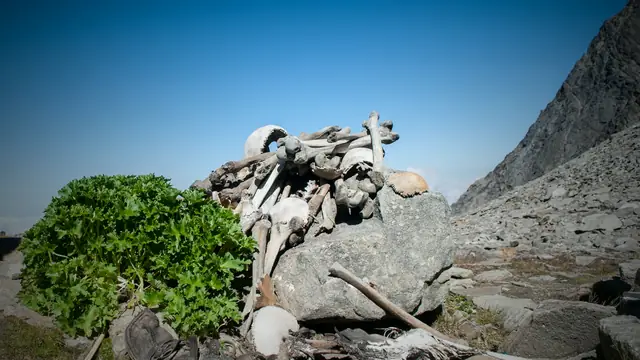
When he examined the skulls, he noticed something strange. Many of them had short, deep cracks. And they were all in the same place, on the very top of the head.
जब उन्होंने खोपड़ियों की जाँच की, तो उन्हें कुछ अजीब दिखा। कई खोपड़ियों में छोटी, गहरी दरारें थीं। और सब एक ही जगह पर, सिर के बिल्कुल ऊपर।
The wounds had been made by round, blunt objects, about the size of cricket balls. And they had come from directly above. There were no wounds from weapons. No signs of an avalanche.
ये चोटें गोल, भोथरी चीज़ों से लगी थीं, क़रीब क्रिकेट की गेंद जितनी बड़ी। और ये सीधे ऊपर से आई थीं। हथियारों के कोई घाव नहीं थे। हिमस्खलन का कोई निशान नहीं।
The team concluded that these people had been killed by enormous hailstones. Exactly as the legend said.
टीम का नतीजा था कि इनकी जान बहुत बड़े ओलों से गई। ठीक वैसे, जैसा कथा में कहा गया था।
To find out when they died, the team turned to radiocarbon dating. Every living thing takes in a tiny amount of radioactive carbon. After death, it slowly fades away, at a steady, known rate, like the sand in an hourglass. By measuring how much is left, scientists can estimate when a person died.
ये लोग कब मरे, ये जानने के लिए टीम ने रेडियोकार्बन डेटिंग का सहारा लिया। हर जीवित चीज़ रेडियोधर्मी कार्बन की थोड़ी सी मात्रा लेती है। मौत के बाद, ये एक तय, जानी-पहचानी रफ़्तार से धीरे-धीरे घटता है, रेतघड़ी की रेत की तरह। कितना बचा है, ये नापकर वैज्ञानिक अंदाज़ा लगाते हैं कि इंसान की मौत कब हुई।
Bones sent to the radiocarbon laboratory at Oxford University were dated to around the year eight hundred and fifty. A royal pilgrimage, caught in a deadly hailstorm, more than a thousand years ago. For a while, it seemed the mystery of Roopkund had finally been solved.
ऑक्सफ़ोर्ड यूनिवर्सिटी की रेडियोकार्बन लैब भेजी गई हड्डियों की उम्र क़रीब आठ सौ पचास ईस्वी निकली। एक शाही तीर्थयात्रा, जो एक जानलेवा ओलावृष्टि में फँस गई, हज़ार साल से भी पहले। कुछ समय के लिए लगा, रूपकुंड का रहस्य आख़िरकार सुलझ गया।
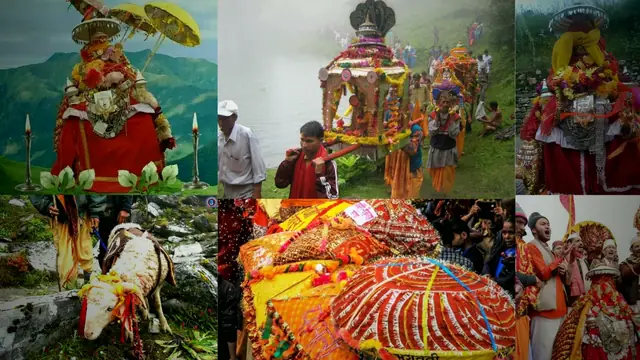
There was even another clue. The great pilgrimage to Nanda Devi still happens today. It is called the Nanda Devi Raj Jat, and it is held roughly once every twelve years. Its route climbs right past Roopkund. And among the remains at the lake, parasols of the kind carried in that procession were reportedly found.
एक और सुराग़ भी था। नंदा देवी की बड़ी तीर्थयात्रा आज भी होती है। इसे नंदा देवी राज जात कहते हैं, और ये क़रीब हर बारह साल में होती है। इसका रास्ता ठीक रूपकुंड के पास से गुज़रता है। और बताया जाता है कि झील के अवशेषों के बीच, उसी तरह के छत्र मिले, जैसे इस यात्रा में ले जाए जाते हैं।
But the lake was not finished with its secrets.
पर झील के राज़ अभी ख़त्म नहीं हुए थे।
In two thousand nineteen, an international team of twenty eight scientists from India, the United States, and Europe published a new study in the journal Nature Communications. They had done something no one had done before. They had read the ancient DNA of the people of Roopkund.
दो हज़ार उन्नीस में, भारत, अमेरिका और यूरोप के अट्ठाईस वैज्ञानिकों की एक अंतरराष्ट्रीय टीम ने नेचर कम्युनिकेशंस पत्रिका में एक नया अध्ययन छापा। उन्होंने वो किया था, जो पहले किसी ने नहीं किया। उन्होंने रूपकुंड के लोगों का प्राचीन डीएनए पढ़ा था।
It was the first ancient DNA ever reported from India. The team studied mitochondrial DNA from seventy two skeletons, and complete genomes from thirty eight of them.
ये भारत से रिपोर्ट किया गया पहला प्राचीन डीएनए था। टीम ने बहत्तर कंकालों के माइटोकॉन्ड्रियल डीएनए, और उनमें से अड़तीस के पूरे जीनोम का अध्ययन किया।

And the results changed everything.
और नतीजों ने सब कुछ बदल दिया।
The skeletons did not belong to one group of people. They belonged to at least three.
ये कंकाल लोगों के एक समूह के नहीं थे। ये कम से कम तीन समूहों के थे।
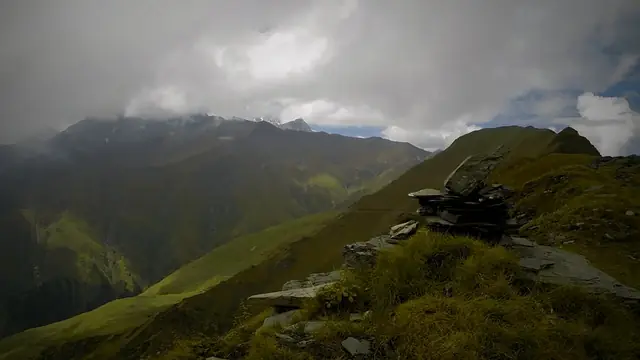
The first group, twenty three people, had ancestry like people living in South Asia today. But even they were not one family or one community. They came from many different groups. And they had not all died at once. Their deaths were spread between the seventh and the tenth centuries, possibly in several separate events.
पहला समूह, तेईस लोग, जिनकी वंशावली आज के दक्षिण एशिया के लोगों जैसी थी। पर वो भी एक परिवार या एक समुदाय नहीं थे। वो कई अलग-अलग समूहों से थे। और वो सब एक साथ नहीं मरे थे। उनकी मौतें सातवीं से दसवीं सदी के बीच फैली थीं, शायद कई अलग-अलग घटनाओं में।
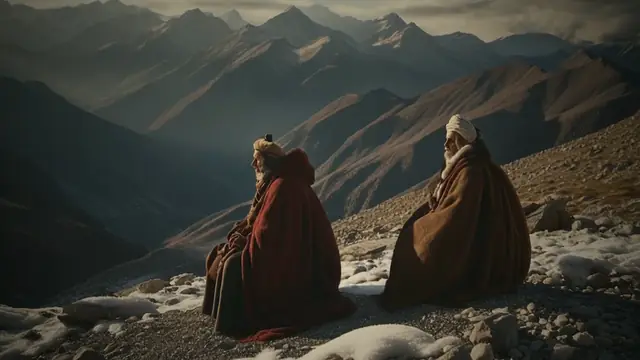
Then came the surprise. Fourteen of the skeletons had ancestry typical of the eastern Mediterranean. Their closest genetic match today is the people of Crete and Greece.
फिर आया चौंकाने वाला नतीजा। चौदह कंकालों की वंशावली पूर्वी भूमध्यसागर के लोगों जैसी थी। आज उनका सबसे क़रीबी आनुवंशिक मेल क्रीट और ग्रीस के लोग हैं।
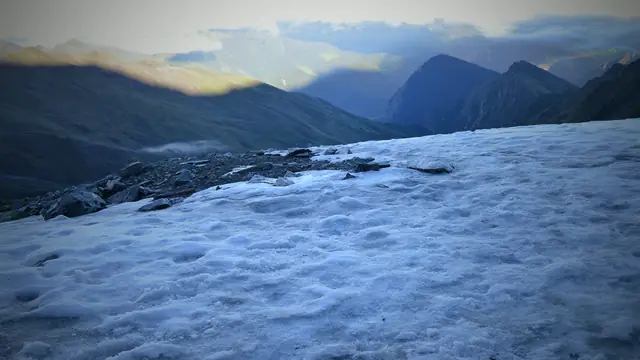
And they had not died a thousand years ago. They had died around the year eighteen hundred. Roughly a thousand years after the first group.
और वो हज़ार साल पहले नहीं मरे थे। उनकी मौत क़रीब अठारह सौ ईस्वी में हुई थी। पहले समूह से लगभग एक हज़ार साल बाद।
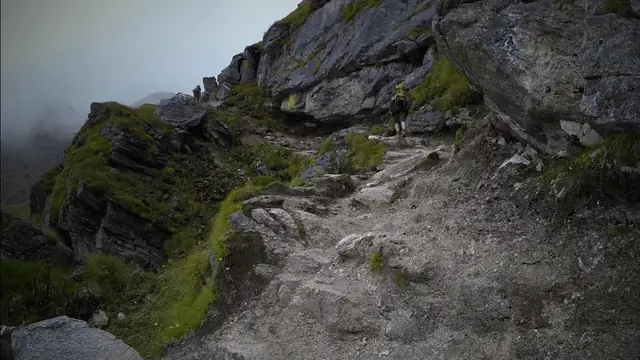
There was one more person, with ancestry from Southeast Asia, who also died in that later period.
एक और इंसान था, दक्षिण-पूर्व एशियाई वंशावली वाला, जिसकी मौत भी उसी बाद वाले दौर में हुई।
The scientists also studied what these people had eaten, using the chemistry of their bones. The South Asian group had very varied diets, as you might expect from people of many backgrounds. But the Mediterranean group had eaten very little millet. Their diet looked nothing like that of the first group.
वैज्ञानिकों ने हड्डियों के रसायन से ये भी जाँचा कि ये लोग क्या खाते थे। दक्षिण एशियाई समूह का खाना बहुत अलग-अलग तरह का था, जैसा कई पृष्ठभूमियों के लोगों से उम्मीद होती है। पर भूमध्यसागरीय समूह ने बाजरा बहुत कम खाया था। उनका खाना पहले समूह जैसा बिल्कुल नहीं था।
So the lake does not hold the victims of one terrible night. It holds people who died there in at least two different eras, about a thousand years apart.
तो ये झील एक भयानक रात के शिकारों की नहीं है। इसमें वो लोग हैं, जो कम से कम दो दौर में, क़रीब हज़ार साल के फ़ासले पर, यहाँ मरे।
Which leaves the biggest question of all. What were people from the eastern Mediterranean doing, at a frozen lake high in the Himalayas, around two hundred years ago?
जिससे सबसे बड़ा सवाल बचता है। पूर्वी भूमध्यसागर के लोग, क़रीब दो सौ साल पहले, हिमालय की ऊँचाई पर एक जमी हुई झील पर क्या कर रहे थे?
No one knows. Not even the scientists who studied them. As one of the lead researchers, Niraj Rai, put it, it is still not clear what brought these individuals to Roopkund Lake, or how they died.
कोई नहीं जानता। वो वैज्ञानिक भी नहीं, जिन्होंने इनका अध्ययन किया। प्रमुख शोधकर्ता नीरज राय के शब्दों में, अब भी साफ़ नहीं कि इन लोगों को रूपकुंड तक क्या लाया, या इनकी मौत कैसे हुई।
Were they travellers who joined the pilgrimage? Explorers? People lost in the mountains? Every answer, for now, is only a guess.
क्या वो यात्री थे, जो तीर्थयात्रा में शामिल हो गए? खोजी? पहाड़ों में भटके लोग? फ़िलहाल, हर जवाब बस एक अंदाज़ा है।
And what about the hailstorm? It may still explain some of the deaths. The wounds on those skulls are real. But it cannot explain them all. Not when the dead are separated by a thousand years.
और ओलावृष्टि? हो सकता है वो कुछ मौतों की वजह हो। खोपड़ियों पर चोटें असली हैं। पर वो सबकी वजह नहीं हो सकती। तब नहीं, जब मरने वालों में हज़ार साल का फ़ासला है।
So Roopkund remains what it has always been. A silent lake, high above the clouds, where the ice melts every summer, and the bones of travellers from across the world return to the light.
तो रूपकुंड आज भी वैसा ही है, जैसा हमेशा था। बादलों से ऊपर एक ख़ामोश झील, जहाँ हर गर्मी बर्फ़ पिघलती है, और दुनिया भर के यात्रियों की हड्डियाँ फिर उजाले में लौट आती हैं।
The legend says a goddess was angered here. The science says people came to this place again and again, across a thousand years, and some never left. Perhaps both are telling us the same thing. That some places on earth are not meant for us to stay.
कथा कहती है कि यहाँ एक देवी क्रोधित हुई थीं। विज्ञान कहता है कि लोग हज़ार सालों में बार-बार यहाँ आए, और कुछ कभी लौटे नहीं। शायद दोनों हमें एक ही बात बता रहे हैं। कि धरती की कुछ जगहें हमारे ठहरने के लिए नहीं बनीं।
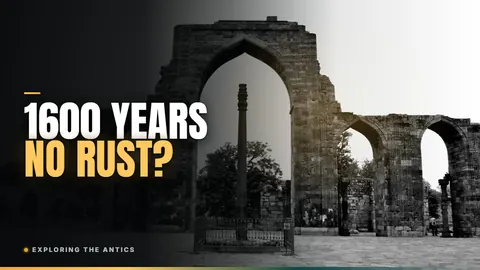
And next time, we will visit an iron pillar in Delhi that has stood in the open air for more than sixteen hundred years, and has barely rusted. The secret of the Iron Pillar is our next mystery.
लौह स्तंभ का राज़, हमारा अगला रहस्य।