हर दिवाली की रात, लाखों घर एक दीप जलाकर माँ लक्ष्मी का स्वागत करते हैं। और यह कथा है कि देवी इस संसार में कैसे आईं, क्षीरसागर से।
Every Diwali night, millions of homes welcome Lakshmi with a lamp. And this is the story of how the goddess came into the world, from the ocean of milk.
बहुत से घरों में, लक्ष्मी पूजा दिवाली की रात का हृदय है, दीपों, फूलों, मिठाइयों, और आने वाले साल में सुख, शांति और समृद्धि की प्रार्थना के साथ। इसी हफ़्ते, धनतेरस पर, बहुत से लोग देवताओं के वैद्य, भगवान धन्वंतरि की भी पूजा करते हैं। परंपरा कहती है, ये दोनों एक ही सागर से प्रकट हुए।
In many homes, Lakshmi Puja is the heart of Diwali night, with lamps, flowers, sweets, and prayers for peace and prosperity in the year ahead. This week, on Dhanteras, many also pray to Dhanvantari, the physician of the gods. Both of them, tradition tells us, rose from the same ocean.
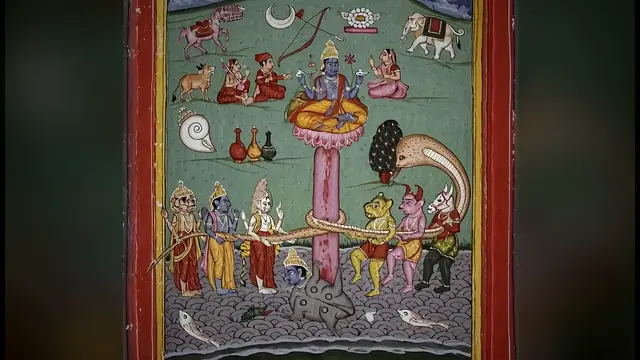
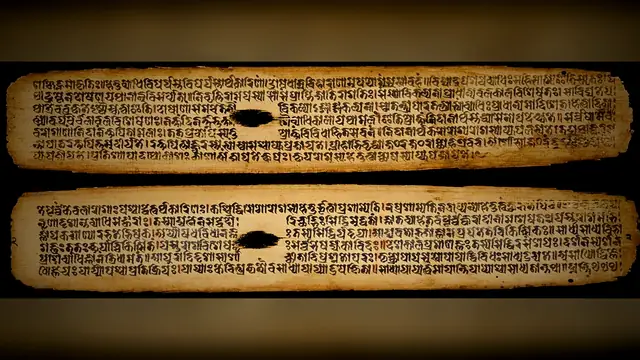
यह कथा है समुद्र मंथन की, क्षीरसागर के मंथन की। यह महाभारत में, विष्णु पुराण में, और भागवत पुराण में सुनाई गई है, और भारत के हर कोने में इसे प्रेम किया जाता है।
It is the story of the Samudra Manthan, the churning of the ocean of milk. It is told in the Mahabharata, the Vishnu Purana, and the Bhagavata Purana, and it is loved in every part of India.
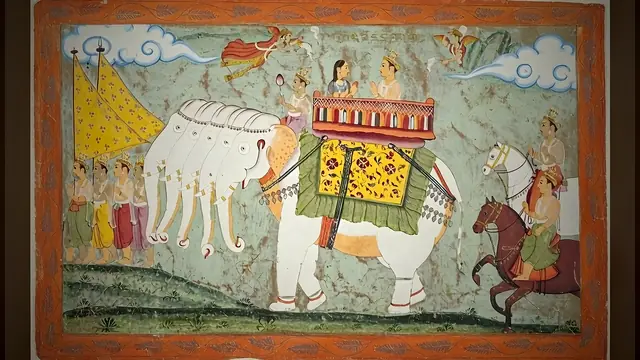
विष्णु पुराण में, यह कथा एक माला से शुरू होती है। ऋषि दुर्वासा, देवताओं के राजा इंद्र को स्वर्गीय फूलों की एक माला भेंट करते हैं। इंद्र उसे अपने हाथी ऐरावत के सिर पर रख देते हैं, और हाथी उसे ज़मीन पर फेंक देता है।
In the Vishnu Purana, it begins with a garland. The sage Durvasa offers Indra, king of the gods, a garland of heavenly flowers. Indra places it on the head of his elephant, Airavata, and the elephant throws it to the ground.
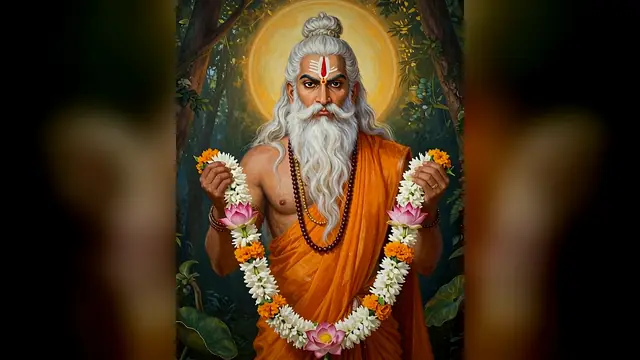
ऋषि क्रोधित हो जाते हैं, और इंद्र को श्राप देते हैं, कि वे तीनों लोकों पर अपना राज खो देंगे। लोकों की शोभा चली जाती है, देवता दुर्बल हो जाते हैं, और उनके प्रतिद्वंद्वी, असुर, उन्हें हराने लगते हैं।
The sage is angry, and he curses Indra, that he will lose his rule over the three worlds. The worlds lose their splendour, the gods grow weak, and the asuras, their rivals, begin to defeat them.
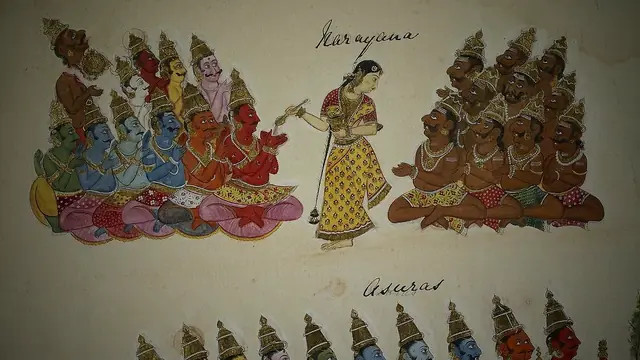
देवता सहायता के लिए भगवान विष्णु की शरण में जाते हैं। और उनकी सलाह चौंकाने वाली है। अपने शत्रुओं से मेल कर लो, वे कहते हैं, और मिलकर क्षीरसागर का मंथन करो। उससे अमृत निकलेगा, अमरता का अमृत।
The gods turn to Lord Vishnu for help. And his counsel is surprising. Make peace with your enemies, he tells them, and churn the ocean of milk together. From it will come amrita, the nectar of immortality.
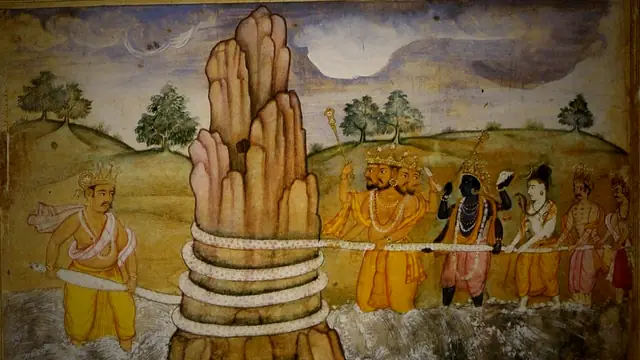
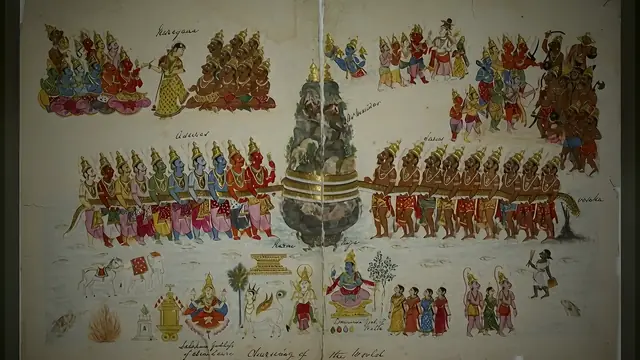
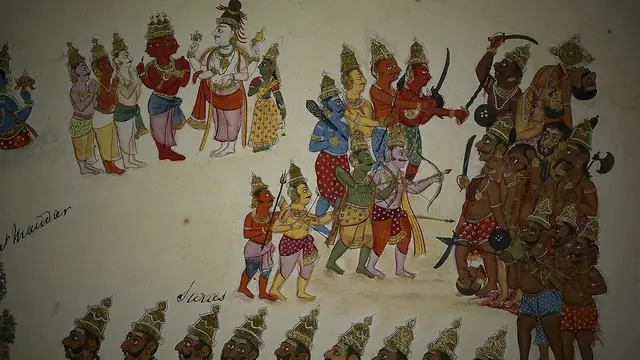
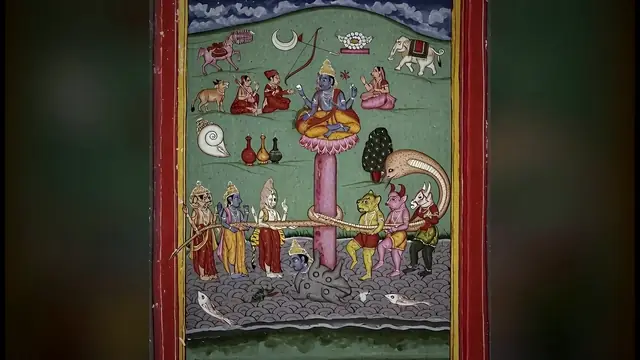
मथानी के लिए वे मंदराचल पर्वत चुनते हैं, और रस्सी के लिए ऐसा सर्प, जो उसके चारों ओर लिपट सके। सर्पों के राजा, वासुकि।
For a churning rod, they choose Mount Mandara. And for a rope, they need a serpent long enough to wind around it. Vasuki, the king of serpents.
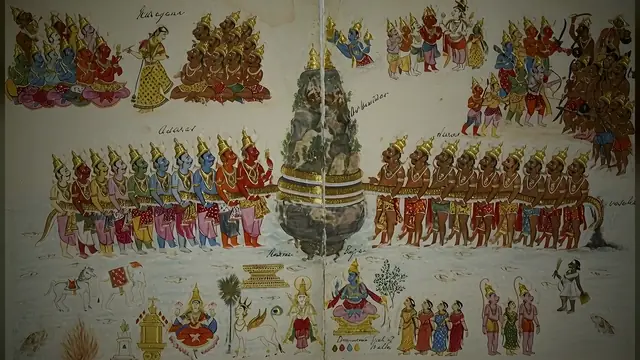
भागवत पुराण एक सुंदर प्रसंग जोड़ता है। भगवान विष्णु सर्प का मुख पकड़ते हैं, और देवता उनके पीछे आते हैं। लेकिन असुर पूँछ पकड़ने से मना कर देते हैं, नीचे का सिरा। तो विष्णु मुस्कुराते हैं, मुख छोड़ देते हैं, और देवता पूँछ पकड़ लेते हैं।
The Bhagavata Purana adds a telling moment. Lord Vishnu takes the serpent's head, and the gods follow him. But the asuras refuse to hold the tail, the lowly end. So Vishnu smiles, lets go, and the gods take the tail instead.
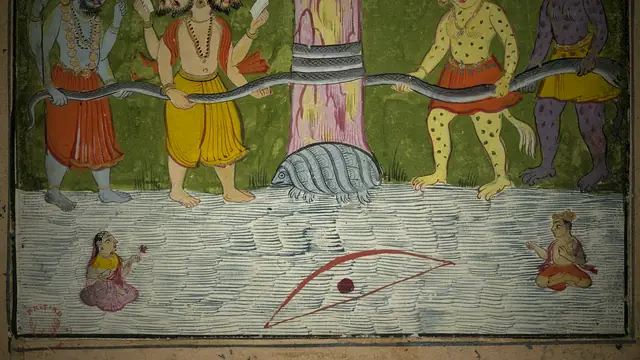
फिर मंथन शुरू होता है। लेकिन पर्वत के नीचे कोई आधार नहीं है, और वह समुद्र में डूबने लगता है। तब भगवान विष्णु एक नया रूप धारण करते हैं, एक विशाल कछुए का, और पर्वत को अपनी पीठ पर उठा लेते हैं। यह है कूर्म, विष्णु के दस अवतारों में दूसरा।
Then the churning begins. But the mountain has nothing to stand on, and it starts to sink into the sea. So Lord Vishnu takes a new form, a giant tortoise, and lifts the mountain on his back. This is Kurma, the second of Vishnu's ten avatars.
पर्वत आगे-पीछे घूमता है। महाभारत में, वासुकि के मुख से धुआँ और ज्वालाएँ निकलती हैं, और वह धुआँ बादल बनकर थके हुए देवताओं पर बरसता है। और सागर देने लगता है।
Back and forth the mountain spins. In the Mahabharata, smoke and flames burst from Vasuki's mouth, and the smoke turns into clouds that rain on the tired gods. And the ocean begins to give.
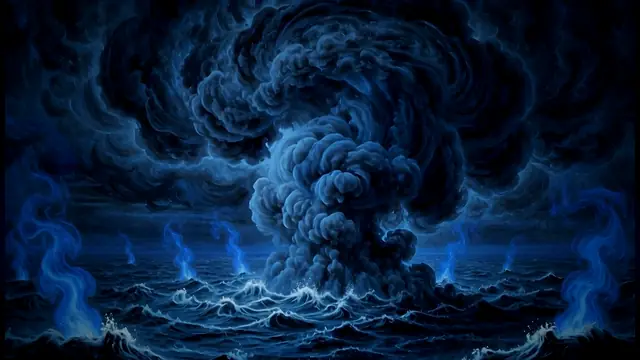
भागवत पुराण में, सबसे पहले जो निकलता है, वह है हलाहल नाम का विष, इतना भयंकर कि वह हर दिशा में फैल जाता है, और तीनों लोक भयभीत हो उठते हैं।
In the Bhagavata Purana, the first thing to rise is a poison called halahala, so fierce that it spreads in every direction, and the three worlds are terrified.
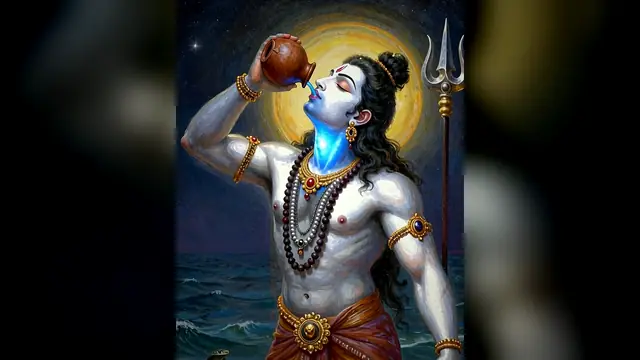
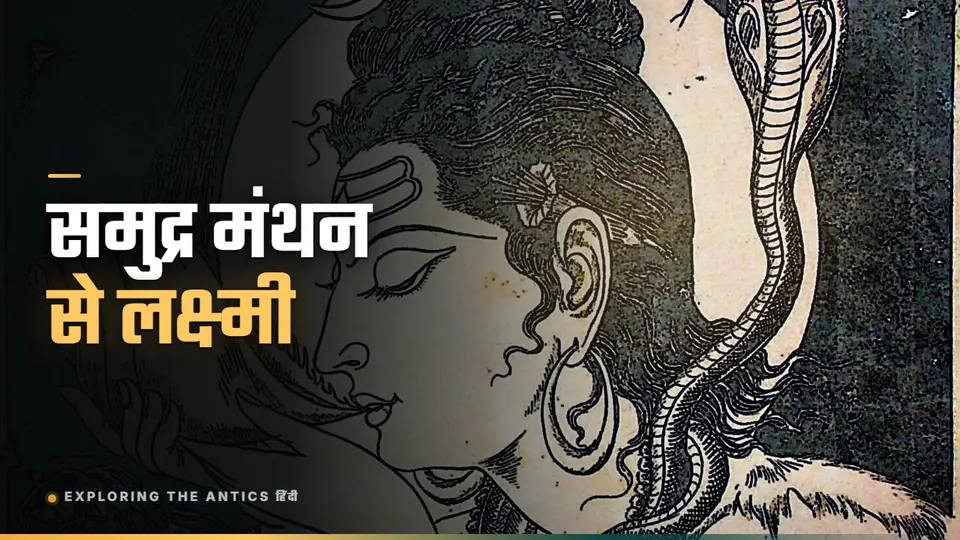
देवता शरण के लिए भगवान शिव के पास दौड़ते हैं। और शिव, सभी प्राणियों पर करुणा करके, विष को हथेली में लेकर पी जाते हैं। उनकी पत्नी, माँ पार्वती, सहमति देती हैं, क्योंकि वे उनकी शक्ति जानती हैं।
The gods run to Lord Shiva for shelter. And Shiva, out of compassion for all living beings, gathers the poison in his palm and drinks it. His wife, Parvati, gives her consent, because she knows his power.
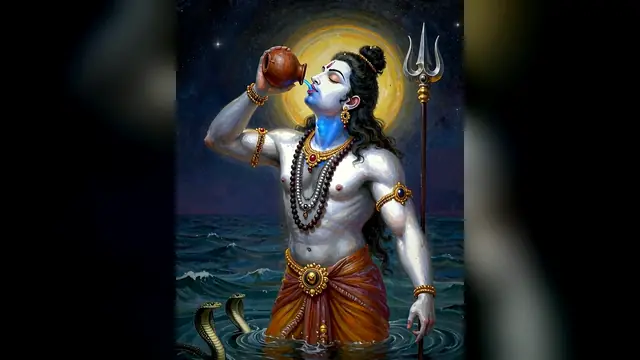
शिव विष को कंठ में रोक लेते हैं, और वह अपना निशान छोड़ जाता है। उनका कंठ नीला हो जाता है। इसीलिए वे नीलकंठ कहलाते हैं, नीले कंठ वाले।
Shiva holds the poison in his throat, and it leaves its mark. His throat turns blue. And that is why he is called Neelakantha, the blue-throated one.
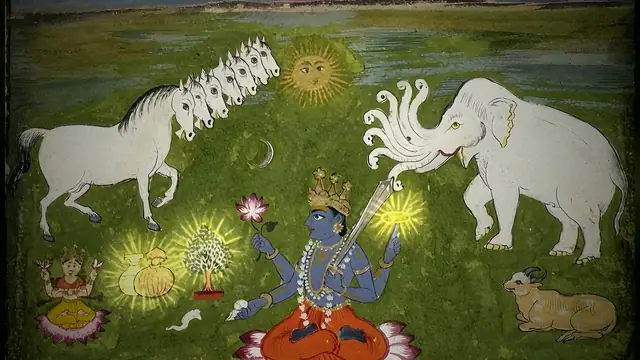
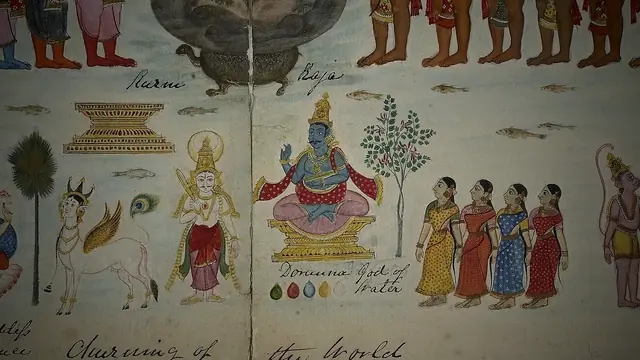
अब सागर अपने रत्न देने लगता है। भागवत कहता है, सबसे पहले आती है सुरभि, कामधेनु गाय। फिर चंद्रमा जैसा सफ़ेद घोड़ा, उच्चैःश्रवा। फिर ऐरावत, चार दाँतों वाला सफ़ेद हाथी।
Now the ocean gives up its treasures. First, the Bhagavata says, comes Surabhi, the cow of plenty. Then a horse as white as the moon, Uchchaihshravas. Then Airavata, the white elephant with four tusks.
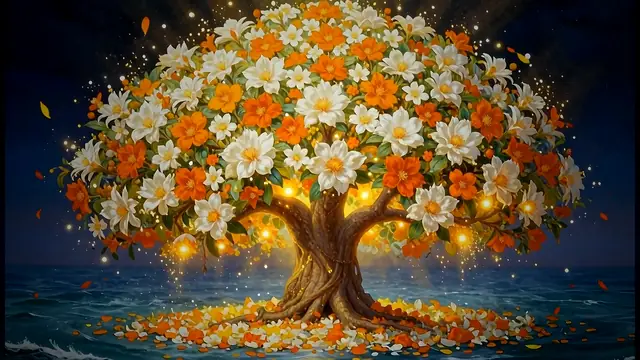
फिर कौस्तुभ मणि, जिसे विष्णु अपनी छाती पर धारण करते हैं। फिर पारिजात, स्वर्ग का कल्पवृक्ष। फिर अप्सराएँ, स्वर्ग की अप्सराएँ, सोने के आभूषणों से सजी हुई।
Then a jewel called Kaustubha, which Vishnu wears on his chest. Then the Parijata, the wish-granting tree of heaven. Then the apsaras, the nymphs of heaven, adorned in gold.
और तब वे प्रकट होती हैं। माँ लक्ष्मी, सौभाग्य की देवी, बिजली की तरह चमकती हुई। देवता, असुर और मनुष्य, सभी उन्हें पाना चाहते हैं।
And then she appears. Lakshmi, the goddess of fortune, shining like lightning. Gods, asuras and humans all desire her.
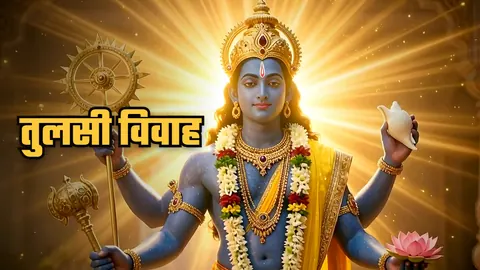
लेकिन लक्ष्मी ऐसे को खोज रही हैं जो हर तरह से पूर्ण हो, जिसे किसी से कुछ न चाहिए। और वे हैं भगवान विष्णु।
But Lakshmi is looking for one who is perfect in every way, one who needs nothing from anyone. And that is Lord Vishnu.
वे ताज़े कमलों की एक माला उनके कंधों पर डाल देती हैं। भागवत पुराण में, लक्ष्मी स्वयं अपना पति चुनती हैं, और वे चुनती हैं नारायण को।
She places a garland of fresh lotuses on his shoulders. In the Bhagavata Purana, Lakshmi chooses her own husband, and she chooses Narayana.
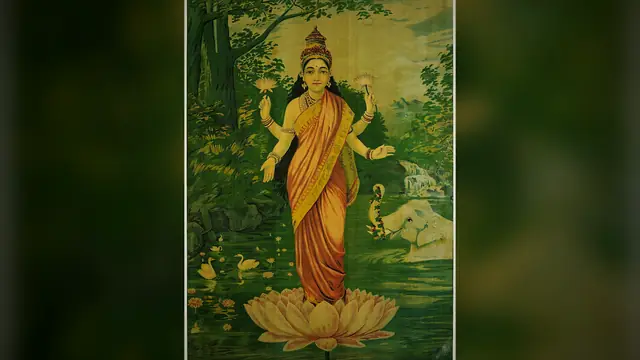
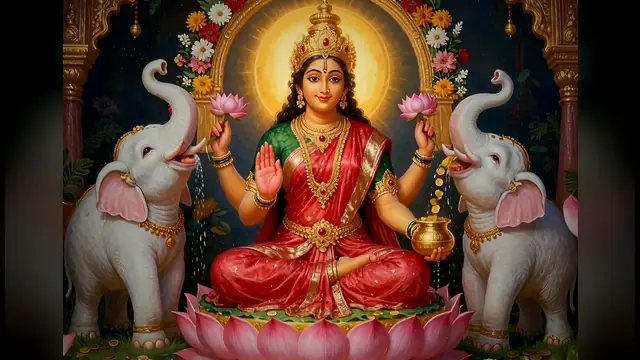
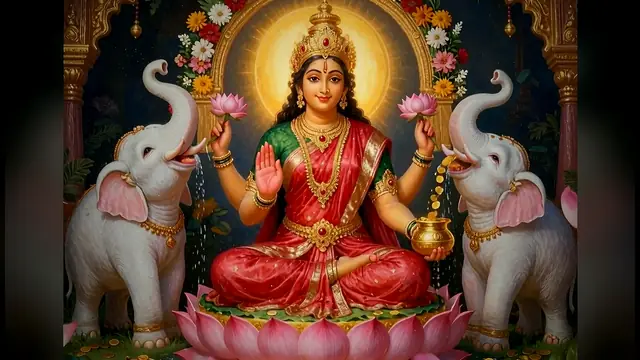
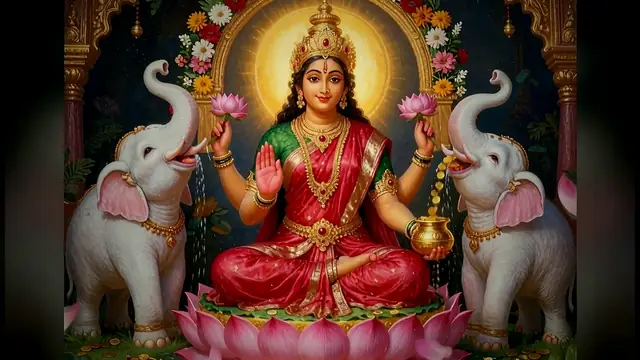
भक्त माँ लक्ष्मी को कमल पर विराजमान देखते हैं, सुनहरे धागों से कढ़े लाल वस्त्र में, और उनके एक हाथ से धन बरसता है। उन्हें श्री भी कहा जाता है, और वे भगवान विष्णु की अर्धांगिनी हैं।
Devotees picture Lakshmi seated on a lotus, in a red dress embroidered with golden threads, with wealth pouring from one of her hands. She is also known as Shri, and she is the consort of Lord Vishnu.
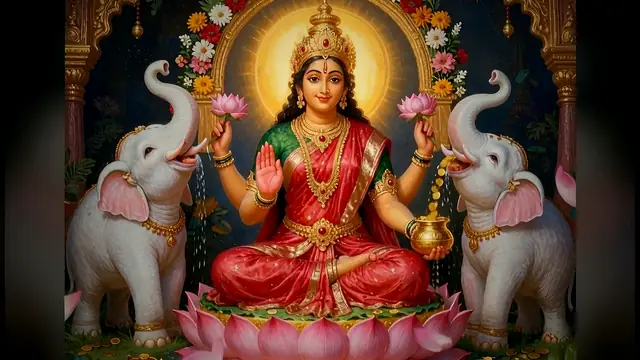
परंपरा कहती है, उनके चार हाथ जीवन के चार पुरुषार्थ हैं, धर्म, काम, अर्थ और मोक्ष। और अक्सर उनके दोनों ओर दो हाथी खड़े होते हैं, समृद्धि और राजसी कृपा के प्रतीक।
Her four hands, tradition says, stand for the four aims of human life, dharma, kama, artha, and moksha. And two elephants often stand beside her, a sign of abundance and royal grace.
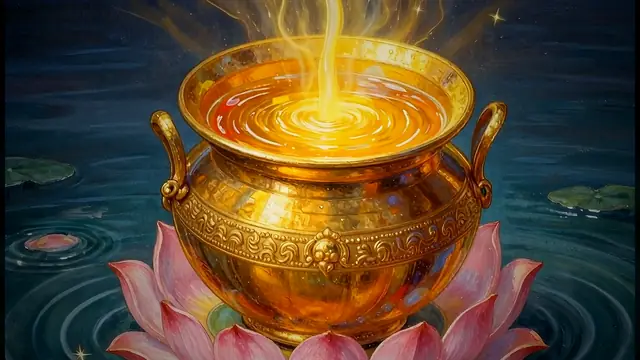
मंथन चलता रहता है। और फिर, आख़िरकार, एक युवा प्रकट होते हैं, बलवान, पीले वस्त्रों में, अमृत से लबालब भरा एक कलश लिए हुए। उनका नाम है धन्वंतरि।
The churning goes on. And then, at last, a young man appears, strong and dressed in yellow, carrying a jar filled to the brim with nectar. His name is Dhanvantari.
भागवत उन्हें स्वयं विष्णु का अंश कहता है, और चिकित्सा विज्ञान का ज्ञाता। आज उन्हें आयुर्वेद के देवता के रूप में पूजा जाता है, भारत की पारंपरिक चिकित्सा पद्धति। और उनके हाथों में है वह पुरस्कार, जिसके लिए सबने परिश्रम किया था। अमृत।
The Bhagavata calls him a part of Vishnu himself, and a master of the science of medicine. Today he is honoured as the god of Ayurveda, India's traditional system of medicine. And in his hands is the prize everyone has worked for. The amrita.
लेकिन जैसे ही असुर कलश देखते हैं, वे उसे छीन लेते हैं। आधा परिश्रम देवताओं ने किया था, और अब पुरस्कार असुरों के हाथ में है। तो देवता उसे वापस कैसे पाते?
But the moment the asuras see the jar, they snatch it away. The gods have done half the work, and the asuras now hold the prize. So how would the gods get it back?
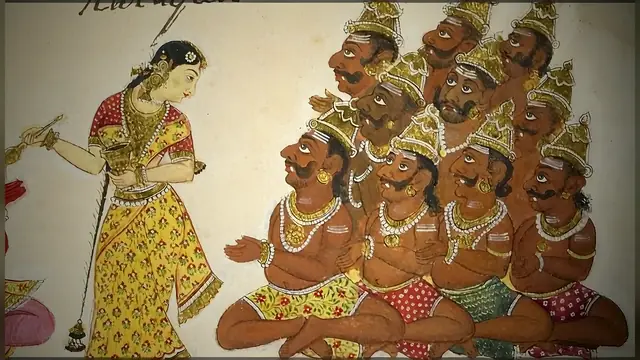
भगवान विष्णु एक और रूप धारण करते हैं। मोहिनी, इतनी मनमोहक कि असुर कलश के लिए लड़ना छोड़ देते हैं और उसे उन्हें सौंप देते हैं। वे देवताओं और असुरों को अलग-अलग पंक्तियों में बिठाती हैं। फिर, मीठी बातों के साथ, अमृत केवल देवताओं को परोसती हैं।
Lord Vishnu takes another form. Mohini, a woman so enchanting that the asuras stop fighting over the jar and hand it to her. She seats the gods and the asuras in separate rows. Then, with sweet words, she serves the nectar to the gods alone.
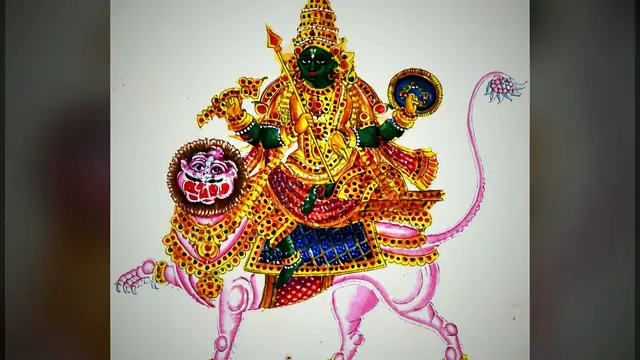
एक असुर यह चाल समझ जाता है, राहु। वह देवता का वेश बनाकर उनके बीच बैठता है, और अमृत पी लेता है। पर सूर्य और चंद्रमा उसे पहचान लेते हैं, और विष्णु का चक्र उसका सिर काट देता है, ठीक जब अमृत गले तक पहुँचता है। शरीर गिर जाता है, पर उसका सिर, जो अमृत चख चुका था, सदा जीवित रहता है।
One asura sees the trick. His name is Rahu. He disguises himself as a god, sits among them, and drinks. But the sun and the moon recognise him, and Vishnu's discus cuts off his head, just as the nectar reaches his throat. His body falls, but his head, having tasted the nectar, lives forever.
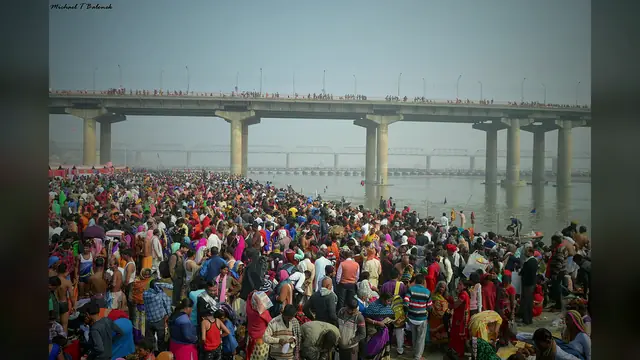
परंपरा एक और अंत जोड़ती है। जब अमृत का कलश ले जाया जा रहा था, तो कुछ बूँदें धरती पर चार स्थानों पर गिरीं। प्रयागराज, हरिद्वार, उज्जैन और नासिक। और हर एक स्थान पर, लगभग हर बारह साल में, कुंभ मेले में करोड़ों लोग इकट्ठा होते हैं।
Tradition adds one more ending. As the pot of nectar was carried away, a few drops fell on the earth, at four places. Prayagraj, Haridwar, Ujjain and Nashik. And at each of them, about every twelve years, millions gather for the Kumbh Mela.
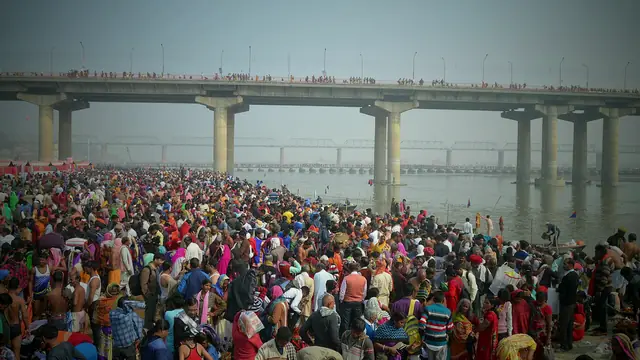
दो हज़ार सत्रह में, यूनेस्को ने कुंभ मेले को मानवता की अमूर्त सांस्कृतिक विरासत में शामिल किया, और इसे धरती पर तीर्थयात्रियों का सबसे बड़ा शांतिपूर्ण समागम कहा।
In twenty seventeen, UNESCO listed the Kumbh Mela as intangible cultural heritage of humanity, calling it the largest peaceful gathering of pilgrims on earth.
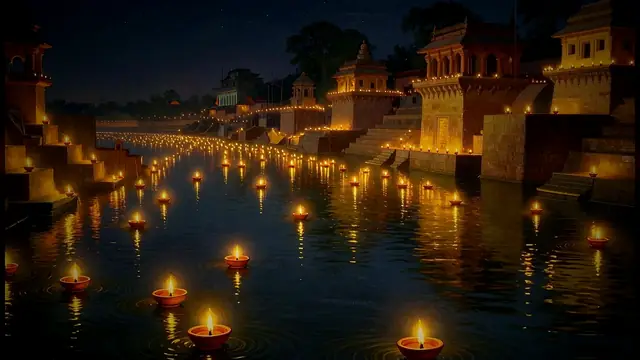
अलग-अलग घर दिवाली की अलग-अलग कथाएँ याद करते हैं, और इस हफ़्ते हम ये सब सुनाएँगे।
Different homes remember different stories of Diwali, and this week we tell them all.
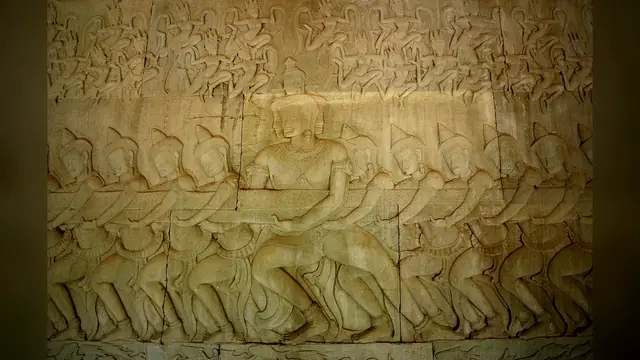
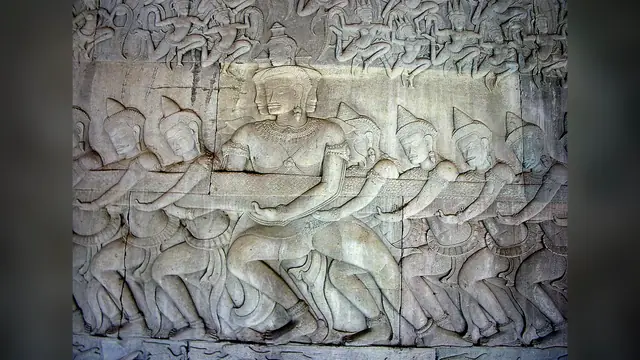
यह कथा भारत से बहुत दूर तक भी पहुँची है। कंबोडिया के अंकोरवाट में, बारहवीं सदी में भगवान विष्णु के लिए बने मंदिर में, सबसे प्रसिद्ध नक्काशियों में से एक मंथन को दिखाती है। उसकी पूर्वी दीर्घा में, देवताओं और असुरों की पंक्तियाँ सर्प को खींचती हैं, और बीच में हैं विष्णु।
The story has also travelled far beyond India. At Angkor Wat in Cambodia, a temple built for Vishnu in the twelfth century, one of the most celebrated carvings shows the churning. Along its eastern gallery, rows of gods and asuras haul on the serpent, with Vishnu at the centre.
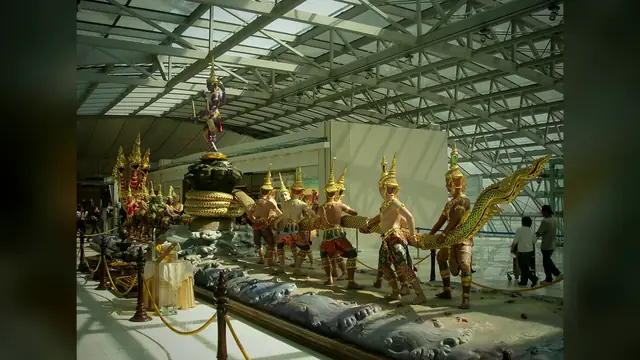
बैंकॉक के सुवर्णभूमि हवाई अड्डे से निकलने वाले यात्री भी इसके पास से गुज़रते हैं। प्रस्थान हॉल में मंथन की एक विशाल मूर्ति खड़ी है, जिसमें विष्णु पर्वत के नीचे कछुए के रूप में हैं।
Travellers leaving Bangkok's Suvarnabhumi Airport walk past it too. In the departure hall stands a huge sculpture of the churning, with Vishnu as the tortoise beneath the mountain.
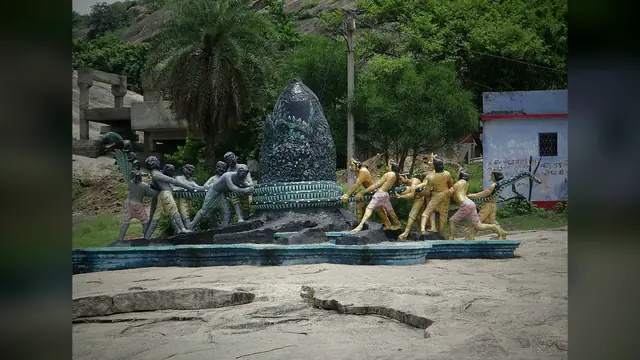
बिहार के बांका ज़िले में, बहुत से भक्त मानते हैं कि मंदार नाम की पहाड़ी ही वह पर्वत है जिसका देवताओं ने प्रयोग किया था। वे उसकी चट्टान पर बने निशान दिखाते हैं, और कहते हैं कि ये सर्प ने छोड़े थे।
In Banka district of Bihar, many devotees believe a hill called Mandar is the very mountain the gods used. They point to marks around its rock, and say the serpent left them.
विष अमृत से पहले आया, और शिव की करुणा ने सबके लिए उसे पी लिया। देवताओं और असुरों ने एक ही रस्सी खींची। और रत्न कड़े परिश्रम के बाद ही मिले। सदियों से यह कथा यही सिखाती आई है।
The poison came before the nectar, and Shiva's compassion drank it for the sake of all. The gods and the asuras pulled on the same rope. And the treasures came only after hard work. That is what the story has taught for centuries.
और इसीलिए, दिवाली की रात, हम माँ लक्ष्मी का स्वागत करते हैं, जो क्षीरसागर से प्रकट हुईं और जिन्होंने भगवान विष्णु को चुना। हम घर साफ़ करते हैं, दीप जलाते हैं, और नए साल में सुख, शांति और समृद्धि की प्रार्थना करते हैं।
And so, on Diwali night, we welcome Lakshmi, the goddess who rose from the ocean of milk and chose Lord Vishnu. We clean our homes, we light our lamps, and we pray for peace and prosperity in the year ahead.
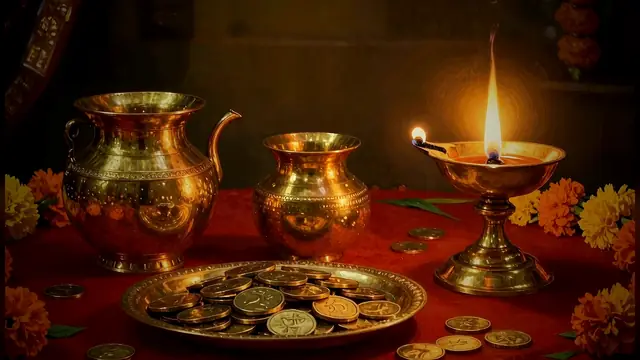
दिवाली से दो रात पहले, धनतेरस पर, हम भगवान धन्वंतरि को याद करते हैं, जो अमृत कलश लेकर प्रकट हुए, और हम अच्छे स्वास्थ्य की प्रार्थना करते हैं, जो सबसे पहला धन है।
Two nights before Diwali, on Dhanteras, we remember Dhanvantari, who rose with the jar of nectar, and we pray for good health, which is the first of all wealth.
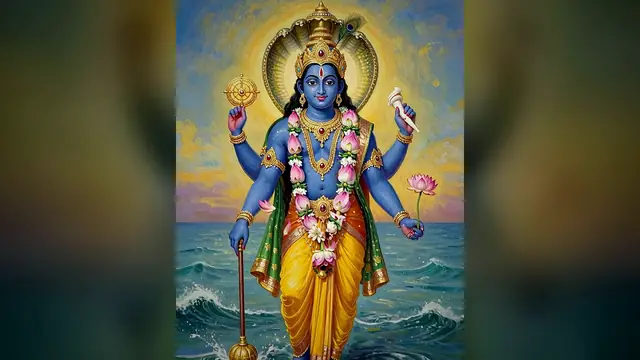
माँ लक्ष्मी और भगवान विष्णु का आशीर्वाद इस साल आपके घर पर बना रहे।
May the blessings of Goddess Lakshmi and Lord Vishnu be with your home this year.